
Category: marketing

France Franchise 2026: Market Notes from the Opportunity Window

France isn’t just “open for franchising” in 2026—it’s a market where franchise France plays compound when everyday needs meet disciplined operations and French-first proof. This is a blog take: what feels real on the street, what is post-hype, and where marketing actually moves outcomes.

The 2026 mood: fewer slogans, more substance

Consumers are selective and price-aware, yet they reward reliability, proximity and transparency. In franchising, that translates into tighter training, consistent delivery, and visible after-sales. The opportunity is there; the filter is tougher. Formats that work in ordinary weeks, not just launch-week fireworks, are the ones that stick in 2026.

Tell-tale sign: a site that’s calmly busy on a random Tuesday 6:30pm with steady staffing—operational truth beats opening-day theatre.

Where momentum feels durable

Personal & home services ride repeat usage and neighbourhood trust. Food & beverage continues where ops travel beyond the founder’s street (fast-casual, bakery/coffee with cost discipline). Wellness & beauty turn reviews and rebooking into a flywheel. Automotive & mobility hold need-based intent (tyres, quick repair, EV services). Education & upskilling leverages content depth and partnerships. Not flashy—durable when store math holds.

Brand promise vs. store math

Ambitious decks stall when staffing, rent and acquisition costs don’t line up. Candidates ask sharper questions: ramp, break-even sensitivity, shift coverage and pipeline seasonality. Brands that publish prudent scenarios and align marketing cadence with ops speed get decisions faster than those promising “viral growth”.

Signals you can actually observe

Signal What to look for Why it matters
Weekday traffic Steady 6–8 pm flow without promo spikes Health in ordinary weeks beats launch noise
Reviews pattern Recent, specific, reply-in-French within 24–48h Ops responsiveness is a growth channel
Staffing stability Consistent faces across weeks Training/turnover under control
Ticket logic Visible price architecture that matches neighbourhood Pricing alignment sustains margin

City vs. region dynamics (field view)

Area type Rent/Capex Talent supply Customer mix Note
Prime metro High Broad but competitive Tourists + locals Visibility is easy; cost discipline is hard
Secondary city Moderate Stable Local repeaters Often the best first-unit balance
Regional town Low to moderate Narrower pool Community-centric Win with proximity and partnerships

Marketing that actually converts (in France)

  • Intent capture on Search & Maps with genuine French localization and fast review replies.
  • In-French case stories that include “what went wrong and how we fixed it”. Authentic beats glossy.
  • Neighbourhood gravity: small partnerships (schools, clubs, workplaces) outperform broad discounts.
  • Cost hygiene: media scale only after month-3 P&L is stable, not the other way around.

Operator habits we keep seeing in winners

  • Proof over pitch: weekly micro-wins instead of generic slogans.
  • Roster realism: schedule for the traffic you have; staff for the traffic you want.
  • Price clarity: visible ladders, no surprise fees.
  • Review ritual: request, reply, resolve—in French, within 24–48h.

Keeping a finger on the pulse

Static lists age quickly; living resources help you pressure-test formats against capital, timeline and territory. For sector overviews and evolving shortlists, browse this curation: France franchise selection (FR). For a neutral ecosystem view (events, data, definitions), consult the French Franchise Federation: franchise-fff.com.

Closing note

2026 isn’t handing out easy wins. It rewards ordinary excellence: useful formats, steady operations, and proof your neighbours can actually see. When those line up, franchise 2026 becomes less about noise and more about trust compounding week after week.

Top 5 Technology Trends to Watch in 2026

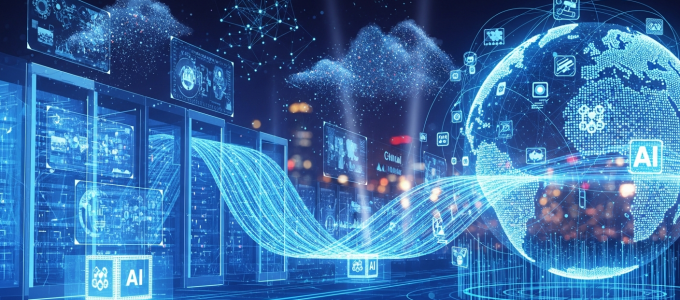
As technology continues to evolve at lightning speed, 2026 is shaping up to be a pivotal year for the integration of artificial intelligence, cloud computing, and intelligent operations. Organizations will need to combine innovation, resilience, and digital sovereignty to stay competitive in an increasingly interconnected and fast-changing world.

1. 2026: The Year of Truth for Artificial Intelligence

After years of experimentation, artificial intelligence (AI) is entering a true maturity phase. Businesses are moving from pilot projects to large-scale deployments, shifting from proofs of concept to proofs of impact. AI is no longer a side tool — it’s becoming the backbone of enterprise architecture and strategic decision-making.

This new era of AI emphasizes the “human–AI synergy” — collaboration, trust, and explainability. Leaders are investing in high-quality data, robust governance, and workforce training to fully leverage AI’s transformative potential while ensuring transparency and ethics remain central.

Learn more about the impact of AI in business (McKinsey)

2. AI Is Rebuilding Software Development

The software development lifecycle is undergoing a revolution. Thanks to generative AI, developers no longer need to write every line of code manually — they simply describe their intent, and the AI turns it into executable logic. This automation speeds up delivery, reduces costs, and improves overall quality.

However, success requires strong governance and human oversight. Companies must focus on quality control, cybersecurity, and responsible automation. In 2026, organizations will reskill their development teams to collaborate with AI agents and design systems that continuously learn and adapt.

Read: How AI is transforming software development (Forbes)

3. Cloud 3.0: A New Hybrid and Sovereign Era

Cloud computing is entering its next evolutionary stage — the era of Cloud 3.0. Beyond multi-cloud and hybrid models, this new generation of infrastructure focuses on sovereignty, performance, and resilience. Organizations are blending public, private, and edge computing environments to achieve flexibility, low latency, and security at scale.

This shift is driven by the growing need to host AI systems efficiently and ensure business continuity amid geopolitical uncertainty. Cloud 3.0 enables modular, distributed architectures that promote data portability, interoperability, and autonomy — key to maintaining both innovation and control.

Explore the future of Cloud 3.0 (Google Cloud)

4. The Rise of Intelligent Operations

Enterprise systems are evolving from static management tools into dynamic, living networks of intelligent operations. Powered by AI agents, these systems can monitor processes, optimize workflows, and even make predictive adjustments before problems occur.

This “co-pilot” model — where humans supervise and AI executes — brings agility, precision, and proactivity to daily operations. In sectors like finance, logistics, HR, and customer service, intelligent operations are transforming how value chains are orchestrated, moving organizations from reactive to proactive management.

Read the Harvard Business Review analysis on intelligent operations

5. The Paradox of Borderless Technological Sovereignty

As global tensions reshape digital ecosystems, technological sovereignty has become both a political and strategic imperative. Governments and enterprises alike are seeking to secure control over critical technologies — data, semiconductors, AI, and cloud infrastructure — without isolating themselves from the global digital economy.

This new paradox creates an environment of resilient interdependence. In 2026, organizations will diversify suppliers, embrace open-source and regional AI models, and invest in sovereign cloud and data ecosystems to strengthen business continuity and reduce dependency risks.

Learn more about digital sovereignty (World Economic Forum)

Conclusion: A More Human, More Strategic Tech Future

The five technology trends defining 2026 reflect a global shift toward smarter, more resilient, and more human-centric innovation. AI, Cloud 3.0, intelligent operations, and digital sovereignty are no longer buzzwords — they’re strategic foundations for the next phase of digital transformation.

As technology moves from experimentation to impact, organizations that balance innovation with ethics, automation with human oversight, and speed with sustainability will define the new standard for success in the digital age.


How does internet marketing work?

Online media currently represent the means of communication with the greatest potential for reaching the public and therefore you should know how internet marketing works? if you have a business that you want to grow quickly through this medium.

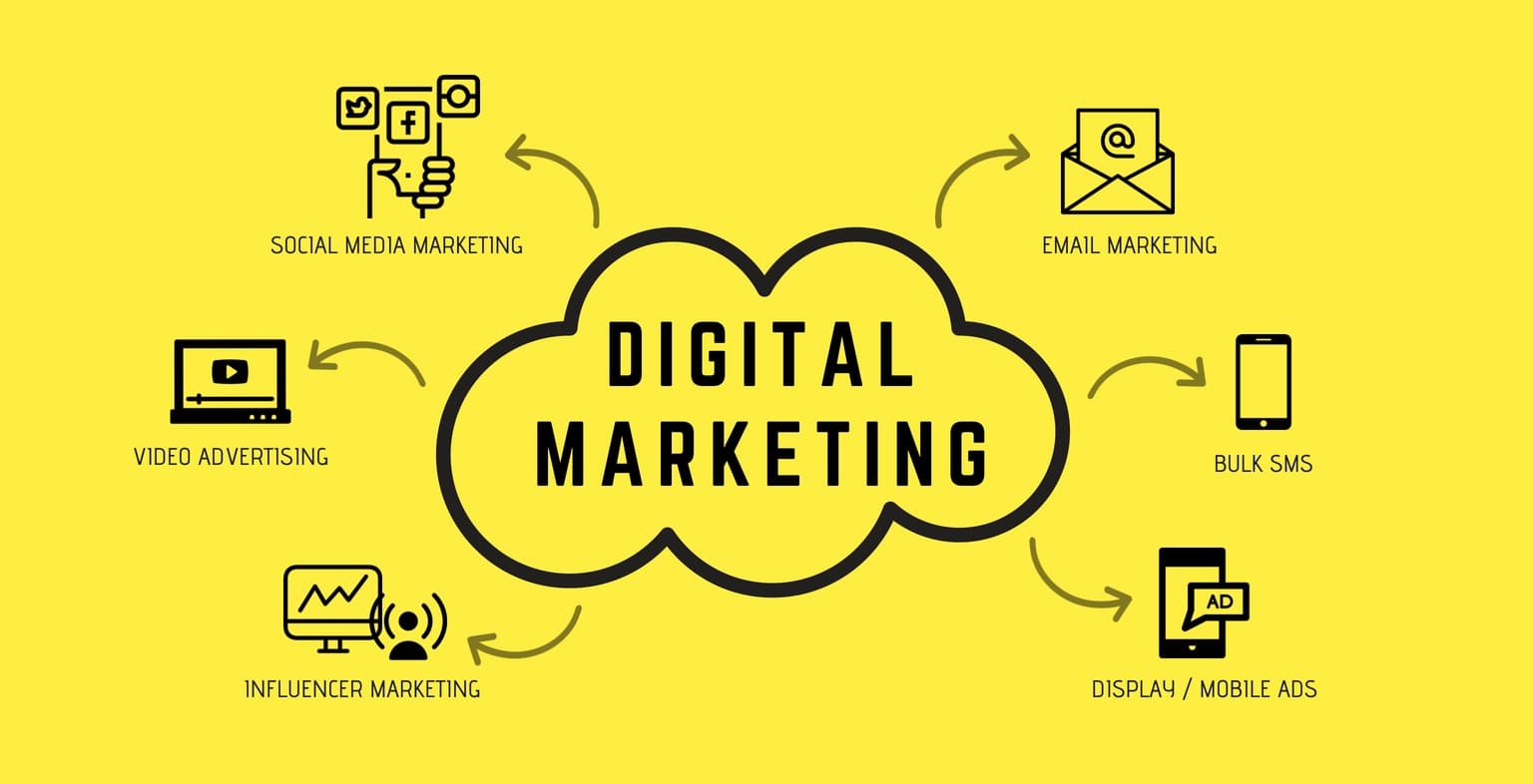
What is the digital marketing?

They are the set of techniques and strategies that you apply in order to improve the marketing of your products and services; using digital media.

That is, advertising them through the Internet, so that they reach a greater number of consumers in the shortest possible time.

In other words, through digital marketing the promotion of your brand is carried out; using strategies within a website or online site; where in turn it is possible to analyze their results in real time.

En Kamaleon.net queremos ser tu agencia de marketing online. Diseñamos la estrategia y trabajamos para llevar tu marketing digital a lo más alto. Empresa experta en SEO en Barcelona. Somos una agencia SEO Barcelona orientada 100% a generar negocio a nuestros clientes. Como agencia de PPC, en Kamaleon agencia sem barcelona nos encargamos de recomendar y gestionar las campañas publicitarias más óptimas para alcanzar tus objetivos de negocio. OKenlaces comprar enlaces de calidad y subir posiciones en Google. Consigue enlaces SEO en periódicos y blogs con autoridad.

For example, one of the means used to carry out digital marketing on the Internet are social channels; taking advantage of the existence of popular networks such as Facebook, Instagram, Tik Tok, LinkedIn and many others.

In each of these digital channels, you have a wide variety of potential customers, formats, particularities, languages ​​and audiences that represent interesting alternatives to create good marketing strategies with which to increase the presence of your brand on the Internet.

How internet marketing works

The consumption habits of the population change over time and along with this the life cycle of the market is altered; Therefore, companies must remain attentive to these changes and offer new alternatives to the general public to stay competitive.

When talking about the operation of marketing on the Internet, reference is made to the strategies of selling products and services in a way that satisfies the needs of customers and at the same time generates enough profits to remain operational.

The way of acquiring everything we need has changed; Now, in the first place, your search is carried out on the Internet; In this case, the first places shown during each query in the browser are privileged.

Although internet marketing is used to promote companies, products and services; The way in which their strategies are implemented is what will ultimately determine the preference of users over one brand or another.

In a nutshell; Social Media Managers are in charge of creating a Marketing plan to give visibility to a brand on the Internet; this in the case of large companies; while in the small ones it is done by the community manager.

The created strategy is taken to a website or online platform, within which it can be directed to the general public or a certain group of users.

The purpose is always to attract their attention to the brand that is being promoted; with the aim of encouraging your purchase or preference over it instead of any other.

There are different types of internet marketing, such as the following:

  • Content marketing, in which information is generated that helps to position a brand, keeping its customers captivated.
  • Inbound marketing, with the aim that customers find your brand and become interested in it in exchange for something that is interesting to them, such as blogs, YouTube videos, SEO strategies, Podcasts and the like.
  • Relationship marketing, when considering the needs and desires of customers to personalize the product offered to them.
  • Conversational marketing, using current customers so that you speak positively about your brand to other users who may be interested in it.
  • Permission marketing, is the employee with the client’s authorization, so that your company can send you advertising and information about promotions, offers and new products or services.

In general lines, the operation of internet marketing is aimed at publicizing what is offered, whether they are products or services; expand the presence and prestige of a brand; with the final objective of capturing the attention of potential customers and making a greater number of sales in the shortest possible time.